


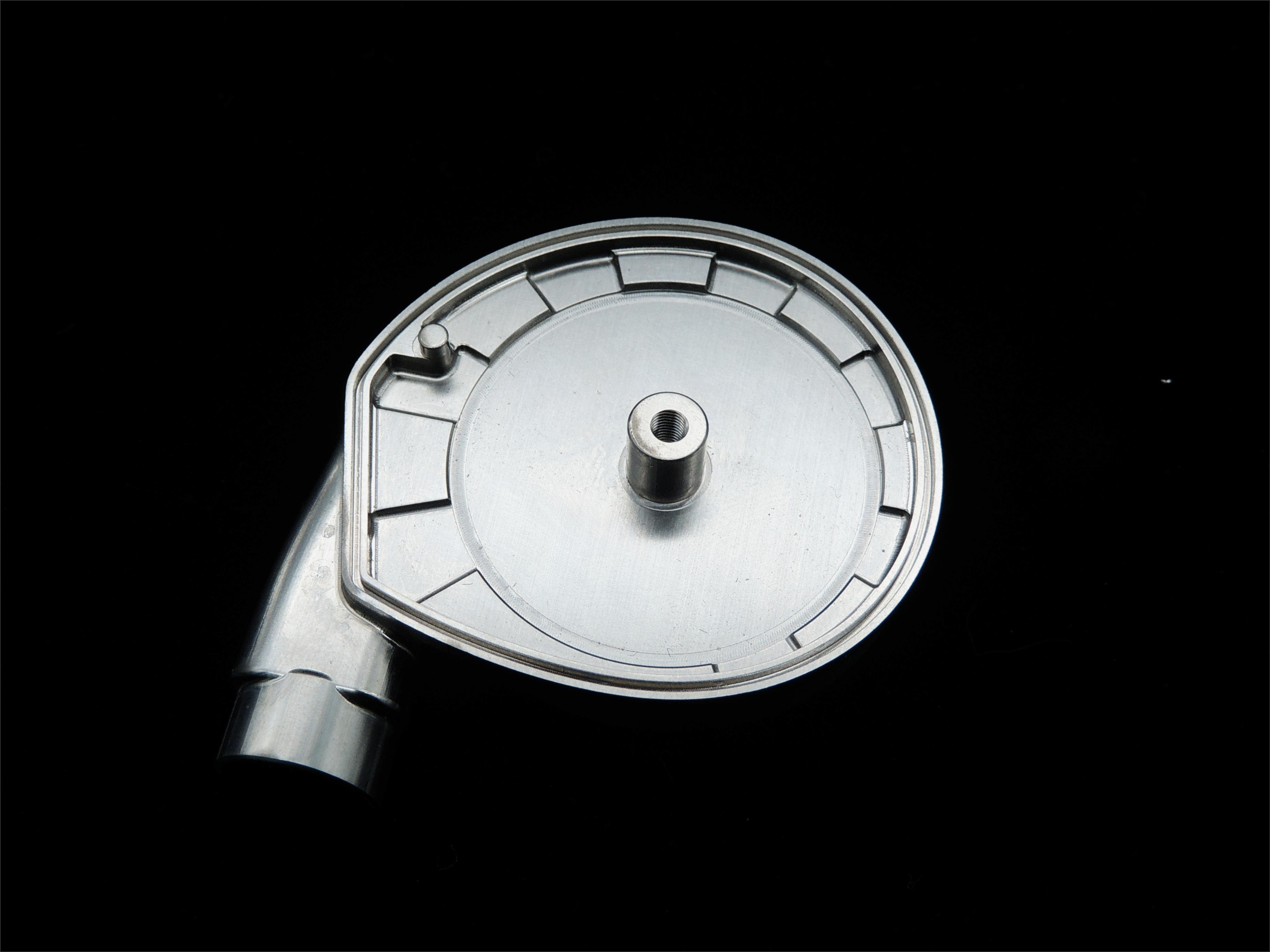


2026 Microfluidics Supply Chain Guide//Engineering-Level Insights for OEMs Scaling from Prototype to Production

Introduction|Why 2026 Feels Different
Over the past 18 months, I’ve had multiple conversations with diagnostics OEMs, life science startups, and platform developers. A recurring theme emerges:
The challenge is no longer chip design. The challenge is scalable, stable manufacturing.
In 2026, microfluidics is not struggling with innovation. It is struggling with industrialization discipline.
Growth in point-of-care diagnostics, molecular testing, cell analysis, and organ-on-chip platforms continues. But the bottleneck has shifted:
Lead-time instability
Yield drop during scale-up
Bonding inconsistency
Inspection gaps in micro-scale features
Compliance pressure in regulated markets
This newsletter is not a market overview. It is a supply chain engineering guide.
1️⃣ The Hidden Risk: Prototype Success ≠ Manufacturing Stability
One of the most common misconceptions:
“If the prototype works, production should be straightforward.”
In reality, most failures occur during the transition from:
10–100 units → 10,000–100,000 units
Why?
Engineering Causes:
Tool wear altering micro-channel tolerances
Polymer shrinkage variation between batches
Surface energy inconsistency affecting bonding yield
Thermal expansion mismatch in multi-material assemblies
Lack of statistical process control (SPC)
Microfluidics operates in micro-scale tolerances where a 5–10 µm deviation can impact flow behavior.
At scale, small process variation becomes systemic risk.
2️⃣ Material Strategy in 2026: Beyond Cost Considerations
Material decisions in 2026 are increasingly strategic.
Common Risk Points:
Specialty polymer sourcing concentration
Precision glass wafer supply volatility
Surface treatment reproducibility
Coating adhesion reliability
Dual sourcing is no longer “nice to have.”
However, qualification across regions must consider:
Surface roughness comparability
Bonding parameter revalidation
Tooling recalibration
Biocompatibility documentation consistency
A material switch can require partial re-validation — something many teams underestimate.
3️⃣ Bonding: The Most Underestimated Yield Killer
In microfluidic assembly, bonding is often treated as a secondary step.
It should not be.
Bonding failures contribute to:
Micro-leakage
Channel deformation
Long-term delamination
Reduced pressure tolerance
Common bonding technologies include:
Thermal bonding
Solvent bonding
UV adhesive bonding
Plasma-assisted bonding
Each requires strict control of:
Surface cleanliness
Pressure uniformity
Temperature gradient
Time consistency
The engineering discipline here defines production stability more than the chip geometry itself.
4️⃣ Inspection Is Not a Final Step — It Is a Process Strategy
Many OEMs rely heavily on final inspection (FQC).
This is a cost-heavy mistake.
Effective 2026 supply chains integrate inspection into:
Incoming material control (IQC)
In-process quality control (IPQC)
First article validation (FAI)
Functional testing loops
Key inspection capabilities that matter:
Optical micro-dimension measurement
Channel geometry verification
Surface defect detection
Bond-line inspection
Flow and leakage functional testing
Microfluidics requires both:
✔ Dimensional validation ✔ Functional validation
Inspection is not about rejecting defects. It is about stabilizing processes.
5️⃣ The Foundry Model: When It Makes Sense
More startups are adopting a foundry partnership model rather than building internal fabrication lines.
This works when:
Capital expenditure is constrained
Volume ramp is uncertain
Regulatory documentation needs structured quality systems
However, OEMs must evaluate:
Does the foundry control key processes in-house?
Are inspection systems integrated or outsourced?
Is scale-up capacity validated or theoretical?
Is DFM support engineering-driven or sales-driven?
A foundry should reduce complexity — not add hidden dependency.
6️⃣ What High-Performance Teams Do Differently in 2026
From our observations, mature OEMs tend to:
1. Integrate DFM Early
Design reviews consider molding limits, bonding windows, and inspection accessibility.
2. Validate Process Windows, Not Just Samples
They document parameter ranges, not just optimal settings.
3. Use Data Feedback Loops
SPC charts, yield tracking, and tolerance trend analysis are routine.
4. Evaluate Scalability Before Locking Design
Tooling capability and cycle time analysis precede volume commitment.
7️⃣ Kerch Engineering Perspective
At Kerch, we view supply chain stability as an engineering architecture problem.
Key areas we emphasize:
Multi-material fabrication capability
Tight tolerance control systems
Structured prototype-to-volume transition
Bonding and surface treatment optimization
Co-development with OEM engineering teams
In microfluidics, reliability is built into:
Tool design
Process control
Inspection data
Documentation discipline
Not just into the CAD file.
8️⃣ 2026 Practical Checklist for OEMs
If you are scaling in 2026, consider asking:
Do we have validated process windows or only successful samples?
Are bonding parameters statistically monitored?
Is inspection data archived and traceable?
Have we stress-tested supply lead-time scenarios?
Is our design tolerant to realistic manufacturing variation?
These questions often determine whether scale-up succeeds.
Closing Thoughts
The microfluidics industry has matured.
The next competitive advantage will not come solely from:
Smaller channels
Faster assays
Novel materials
It will come from:
Engineering-controlled, resilient supply chains.
If you are planning a 2026 production ramp or evaluating manufacturing partners, I am always open to technical discussion.
Feel free to reach out.